Apostles' Creed - Suffered and Crucified

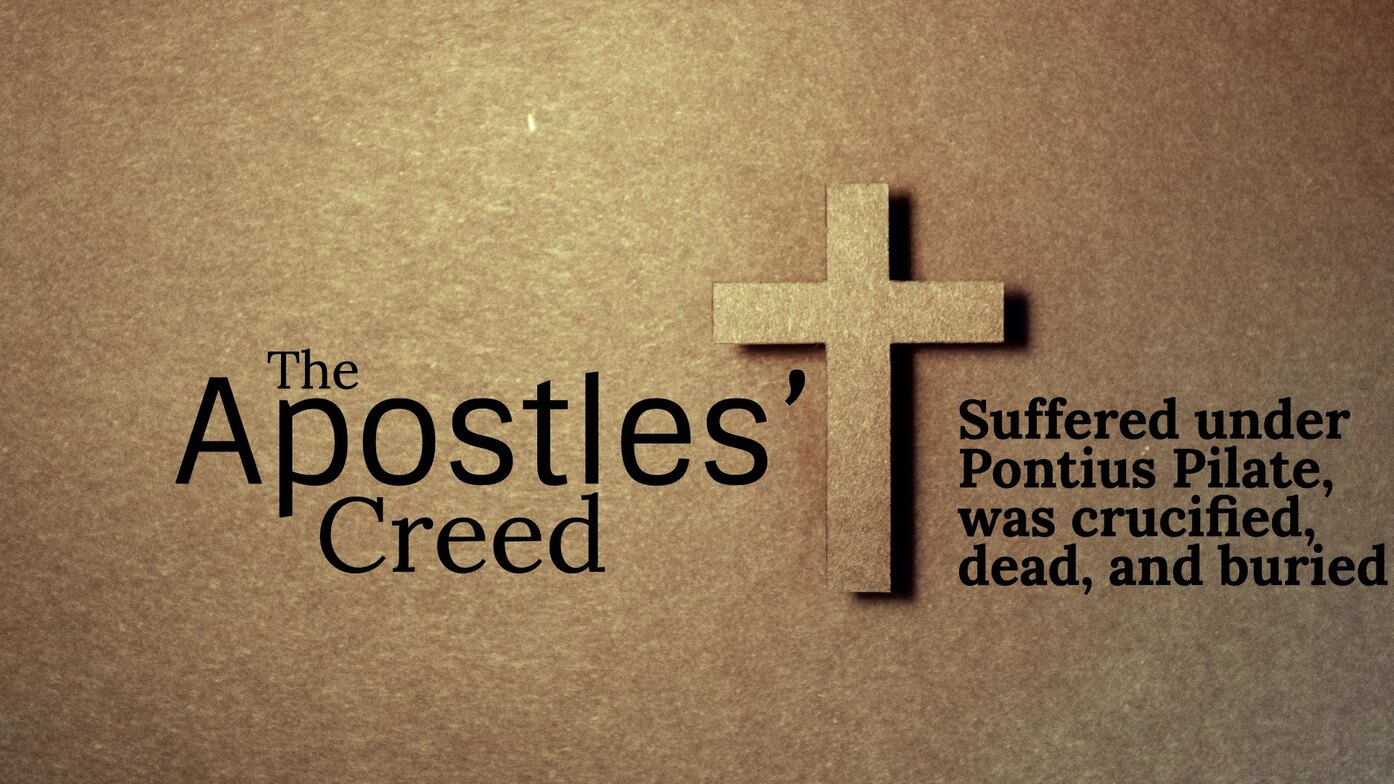
Suffered Under Pontius Pilate, Was Crucified
Text: 1 Peter 2:18–25
Preacher: Pastor Alex
Date: October 25, 2026
Sermon Summary
The cross is where our Lord bore both our sin and our suffering, and in bearing them gave them meaning. Peter preaches the message of the cross from Isaiah’s suffering Servant to servants who were suffering unjustly. There are two lenses through which to read this passage:
First, Christ suffered for us. Verse 24: he himself bore our sins in his body on the tree, taking the curse that hanging there carried. He took the full penalty on the cross, and that is the gospel. But Isaiah 53 says the servant carried our griefs and sorrows too, and Peter’s readers were suffering for things they had not done. So he suffered not only for us but with us. Before him, suffering made no sense: karma blames the victim, and the Greeks offered only comedy, tragedy, or pathos. But when we see Jesus on the cross, for the first time our sufferings find meaning--we see that God cares and has a plan. Our circumstances may not change at all; our experience of them is transformed. We find a healing in the midst of our sufferings because we are sharing in his sufferings.
Second, Christ left an example to follow, like tracing his footprints. This is how that healing reaches us: When we endure suffering in him and like him, when we return to the Shepherd and Overseer of our souls, when we entrust ourselves to the one who judges justly, then he grants to us his grace and we experience a gospel healing even in the midst of our suffering. The reverse holds just as firmly. If in our suffering we sin, lie, revile, or threaten back, we will know nothing of the mystery of what our Lord did, and does, for us.
Discussion Guide
Ice Breaker: What's something you learned by copying someone else--tracing, imitating, or just watching them do it?
1. Remember the Truth. The Creed spends three of its 100 words on Pontius Pilate--one writer compared it to an ugly dog that has wandered into an otherwise perfect painting. What struck you about the reason his name is there?
2. Understand the Truth. Read 1 Peter 2:24, then Isaiah 53:4–6 beside it. Peter says Christ bore our sins; Isaiah adds griefs and sorrows. Putting both in front of you, how would you say what Christ carried to the cross?
3. Test the Truth. The prosperity gospel says Christ nailed your sickness and your depression to the cross, so enough faith should see them gone. Test that against 1 Peter 2:19–20 and the situation Peter is writing into. How does that thinking match the lives of those slaves? (or Paul in 2 Corinthians 12:7-9)
4. Be transformed. Deceit, reviling, threatening back--these come to us so naturally when we suffer. But the way of the cross doesn’t--we find it tough to embrace the suffering with Jesus. What is it in you that finds fighting easier than the cross?
5. Be transformed together. If the gospel shows up most clearly in weakness rather than strength, what would change about what we're willing to let each other see?
6. Be sent. A Roman soldier watched a man die, knew nothing of the resurrection, and said, "Surely this was the Son of God." Who is watching how you're handling something hard right now, and what are they seeing? Are they seeing the same grace of Christ in you?
Supporting Scriptures
- Deuteronomy 21:22–23: Anyone hanged on a tree is under God's curse, which is why Peter's word "tree" says more than "cross" would.
- Isaiah 53:4–6: The servant bears not only our transgressions and iniquities but our griefs and sorrows — the verses Peter weaves through his whole paragraph.
- Lamentations 3:31–33: The Lord does not afflict willingly or from the heart, which keeps his sovereignty over suffering from becoming indifference to it.
- Mark 15:39: A centurion who knew nothing of the resurrection saw a man die and confessed him Son of God — glory recognized in the wounds.
- Luke 9:23: The cross is taken up daily, which is how a once-for-all event becomes a way of life.
- Romans 8:17–18: We are heirs who suffer with him, and the present suffering is weighed against the glory coming.
- 2 Corinthians 1:3–5: As Christ's sufferings overflow to us, so does his comfort — and that comfort is what we then have to give others.
- Galatians 3:13: Paul cites the tree directly: Christ became a curse for us to redeem us from the curse.
- Philippians 4:12–13: Read with verse 12, "I can do all things" plainly means plenty or hunger, abundance or need — strength for what he gives, not for what we want.
- 1 Peter 4:12–14: Peter returns to it later — share Christ's sufferings, and the Spirit of glory rests on you.

-
Location