The Good Samaritan

Who Is Your Neighbour?
Text: Luke 10:25–37
Preacher: Carlos Carrion (guest)
Date: October 4, 2026
Sermon Summary
Carlos Carrion and his wife Veronica have spent seventeen years serving migrant farm workers in the Lower Mainland: driving, translating, going to the bank with them, speaking to employers on their behalf, hosting them in their home, sitting in hospital rooms with men who have no family in this country, and preaching the gospel at farm dinners. He took the story that everyone already knows, the Good Samaritan, and showed us the wide gap between knowing and doing. He followed the questions that were asked and had us answer them to God.
The first question came from the expert: what must I do to inherit eternal life? He was a man of knowledge, and he asked it to test Jesus. Knowledge can give you respect, status, friends, opportunity, success, even fame. A rich man who trusted in his money asked Jesus the same question in Mark 10:17–22. Neither money nor knowledge can give eternal life. That comes through one person only, the Lord Jesus Christ.
Jesus asked the expert to answer his own question from the law, and that expert answered correctly: love the Lord your God with all your heart, soul, strength, and mind, and your neighbour as yourself. Jesus replied to him, "Do this, and you will live." Carlos was honest here; he has loved God for thirty-five years and loves him more now than at the start, but he will not claim he loves God with all of everything. And the second half of the answer is harder still.
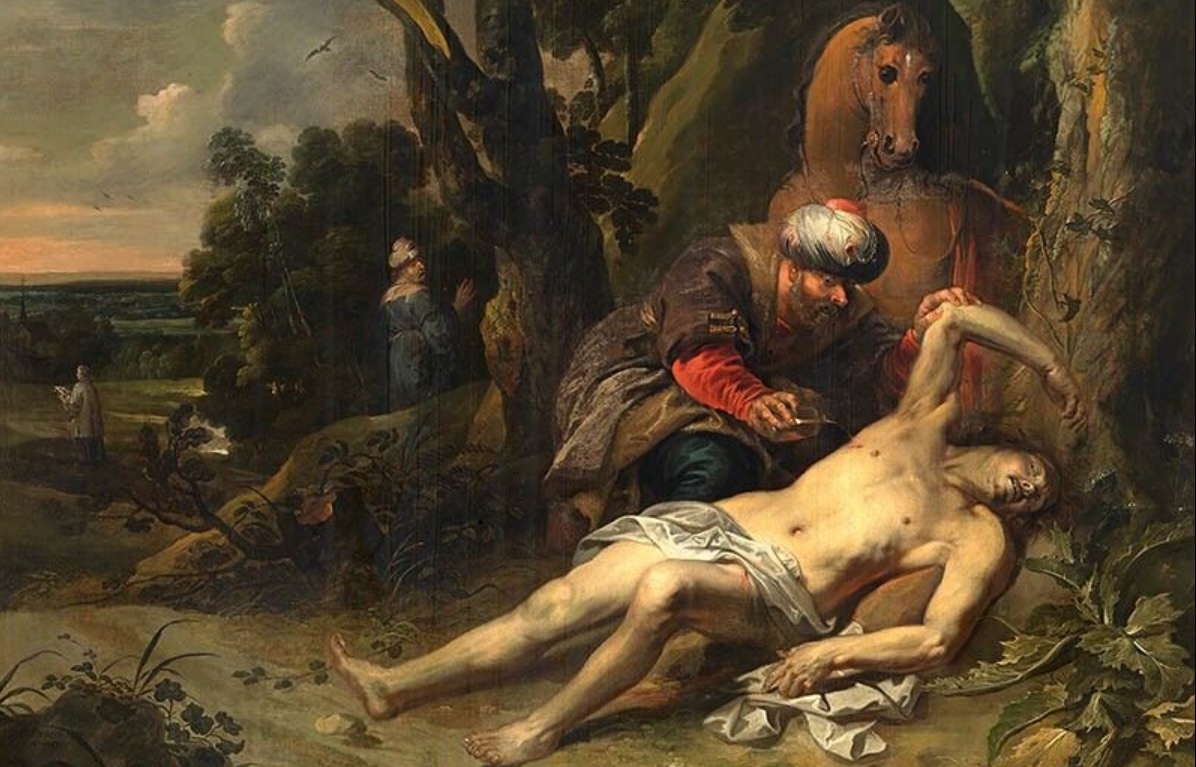
The expert asked a second question: "Who is my neighbour?" He wanted to justify himself. Jesus told the story as his response: A priest and a Levite both saw a suffering man on the side of the road, and both crossed to the other side ignoring him; neither did anything to help. But a Samaritan (someone they would excluded for racist, cultural, and religious reasons) had compassion. He bound the wounds, carried the man on his own donkey, paid his medical expenses, and promised to return and settle any debts. We saw the same dynamics in a story Carlos told of a street fight where a bystander stood and watched, was entertained, and did nothing at all, but others helped stop the fight.
In the end, we need to see that this story is first about what the Lord has done for us: We were the ones left on the road, and he found us, cared for us, carried us, paid what we owed, and is coming back. We love God, then, by doing for others whtat Jesus did for us. Watch for who God will put beside you.
Ice Breaker
Q. Tell us about a time someone stopped to help you when they had no reason to.
Discussion Questions
1. Recall the Truth: The priest and the Levite were trained in God's law, and both crossed to the other side. The one who stopped was a Samaritan, the kind of man they would have excluded based on racial divides and cultural-religious differences. What struck you about who helped and who didn't?
2. Understand the Truth: The expert asks "Who is my neighbour?" (vs. 29) and Jesus finishes by asking "Which of these three proved to be a neighbour?" (vs. 36) How did Jesus' parable change the question in the mind of the expert and everyone who hears this story?
3. Test the Truth: We live in a time when being informed about a problem can feel like caring about it. We read about it, we share it, we hold the right opinion. Is that what God asks of us, or is there something missing from our response? Consider James 2:15–17.
4. Be Changed: Carlos said this parable is first about what the Lord has done for you: you were the one left on the road, and he found you, bound your wounds, carried you, paid what you owed, and promised to come back. How does it change the story to see yourself on the side of the road before you see yourself as the Good Samaritan?
5. Be Changed Together: Carlos looked around our room, said he didn't see many immigrants here, and asked us pointedly whether we will be glad when people from other cultures start moving into the Valley, or whether we'll be the ones complaining. How would you answer him?
6. Be Sent: Carlos said plainly that his gift is not preaching or teaching but serving, with his hands, in his own city. Where has God placed you where no one else is positioned to do what you could do, and what would "go and do likewise" look like there this week?
Supporting Scriptures
- Leviticus 19:18: The command the expert quotes, to love your neighbour as yourself, given in a chapter full of concrete obligations to the poor and the vulnerable.
- Leviticus 19:33–34: The stranger living among you is to be treated as a native, and loved as yourself, because Israel was once the stranger.
- Deuteronomy 6:4–5: The first half of the expert's answer, loving God with all heart, soul, and might, which Jesus affirms as correct.
- Deuteronomy 10:18–19: God himself loves the sojourner, giving food and clothing, and tells his people to love the sojourner for the same reason.
- Matthew 25:34–40: Christ receives what is done for the hungry, the sick, and the stranger as done for him.
- Mark 10:17–22: A rich man asks the same question about eternal life, and his money turns out to be what he cannot let go of.
- Ephesians 2:12–13: We were the excluded strangers, far off, brought near by the blood of Christ, which is why exclusion cannot be our instinct.
- James 1:22–25: The hearer who is not a doer deceives himself, like a man who looks in a mirror and forgets his own face.
- James 2:14–17: Saying "go in peace, be warmed and filled" without giving anything shows a faith that is dead by itself.
- 1 John 3:16–18: We know love by Christ laying down his life, so we love not in word or talk but in deed and truth.

-
Location