The Freedom of Repentance

The Freedom of Repentance
Joel 2:1–17
Alex Hogendoorn – March 1, 2026
Tagline
The Day we cannot endure fell on Jesus—so even now, we are free to return to a gracious and merciful God.
Sermon Summary
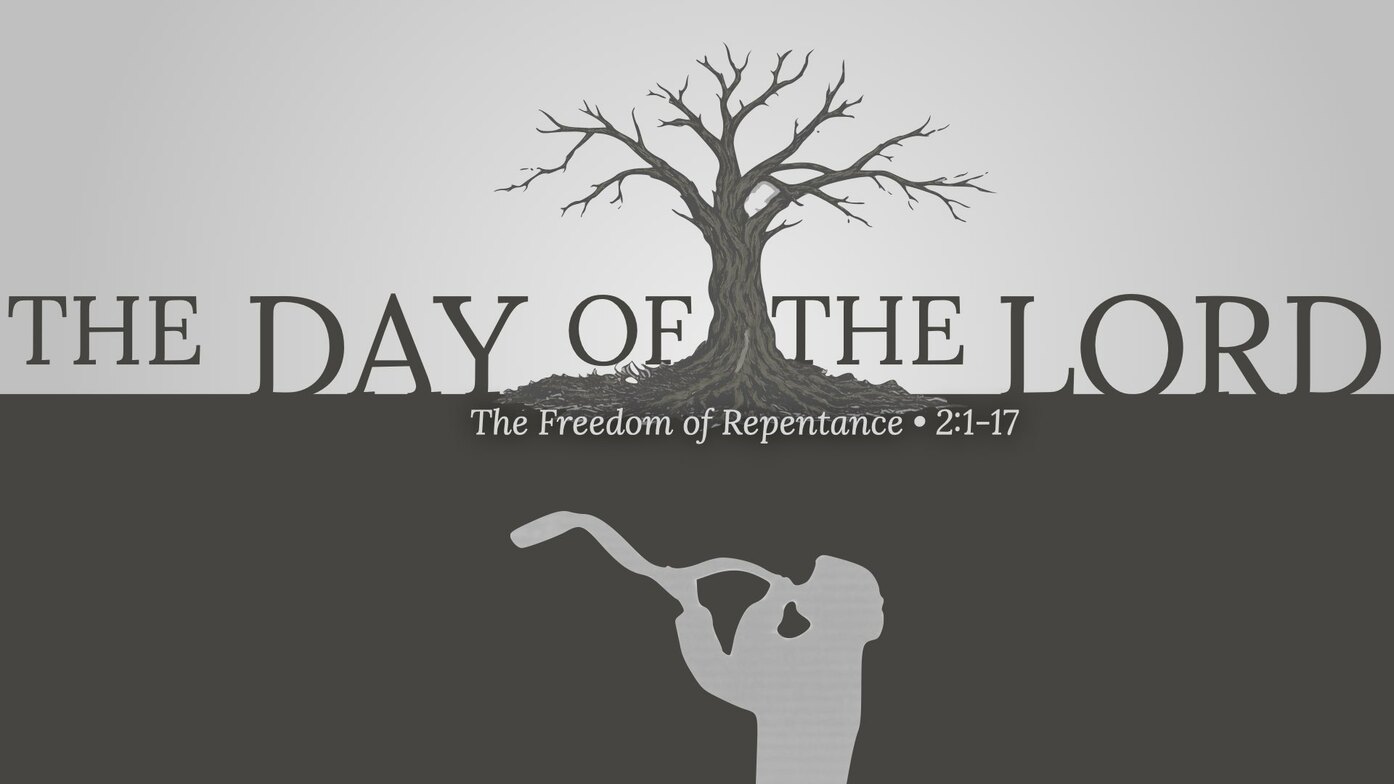
Joel pulls no punches. The trumpet sounds—not for worship, but as an air raid siren. Darkness spreads. Fire consumes. The earth shakes. The Day of the LORD approaches, and Joel forces us to feel its weight. This is not random disaster. The LORD utters his voice before his army. The catastrophe is personal, covenantal, purposeful. “Who can endure it?” That question hangs in the air over ancient Judah—and over us. We are not merely victims of a broken world; we have helped build the city that must be judged.
And then, at the height of dread, comes the stunning mercy: “Yet even now.” The same God whose glory shakes the heavens calls us to return. Rend your hearts, not your garments. The problem is not only what has happened to us, but what is in us. The Day we could not endure fell on Jesus. Darkness covered the land. The earth shook. He stood in the path of judgment and bore it. And from the cross he prayed, “Father, forgive them.” That prayer is why “yet even now” remains open. The trumpet sounds again—not alarm, but assembly. Come back. Gather. Surrender. There is nowhere safer in the universe than trusting the faithfulness of Jesus.
Group Discussion Guide
Icebreaker Question (pick one)
- Playful: What’s the loudest or most jarring alarm you’ve ever heard—and how did you react in that moment?
- Meaningful: When have you experienced a moment that felt like a turning point—where everything could go one direction or another?
Opening Prayer
Ask the Spirit to speak through the word and to lead your time together.
Scripture Reading
Read Joel 2:1–17 aloud as a group.
Main Discussion Questions
1. God Revealed
In this passage, we see both the terrifying holiness of God and his gracious, merciful heart. What do you learn about God’s character from the tension between “The LORD utters his voice before his army” and “Yet even now… return to me”?
2. Humanity Mirrored
The sermon emphasized that we are not just victims of a broken world—we’ve helped build it. Where do you see yourself reflected in that diagnosis? What does it mean personally to “rend your heart and not your garments”?
3. Gospel-Centered Vision
The imagery of Joel’s Day of the LORD appears again at the crucifixion—darkness, trembling earth, judgment falling. How does seeing Jesus endure the Day reshape your understanding of repentance and forgiveness?
4. Transformed Living
The second trumpet calls the people to gather—elders, children, even the bride and groom. What might wholehearted return look like in your life right now? Is there an area where you’ve been negotiating with God instead of surrendering?
5. Sharing and Witness
Have you had a chance to share honestly with humility your own story of how God forgave you? Did that become part of their hope?
For Further Study
- Deuteronomy 28:1–14, 15–24 – Covenant blessing and curse; the framework behind Joel’s warning.
- Exodus 34:6–7 – God proclaims his name as gracious and merciful, slow to anger and abounding in steadfast love.
- Psalm 51 – David models heart-level repentance: a broken and contrite heart God will not despise.
- Isaiah 13:9–13 – Prophetic imagery of the Day of the LORD shaking heavens and earth.
- Jonah 3:5–10 – Nineveh’s repentance shows how mercy meets genuine turning.
- Matthew 27:45–54 – Darkness and earthquake at the crucifixion echo the Day of the LORD imagery.
- Luke 23:34 – Jesus prays, “Father, forgive them,” grounding the hope of “yet even now.”
- 2 Corinthians 5:17–21 – Through Christ, God reconciles the world and entrusts us with that message.
- Hebrews 12:28–29 – Our God is a consuming fire; therefore we worship with reverence and awe.
- 1 John 1:8–9 – Honest confession meets faithful and just forgiveness.

-
Location